
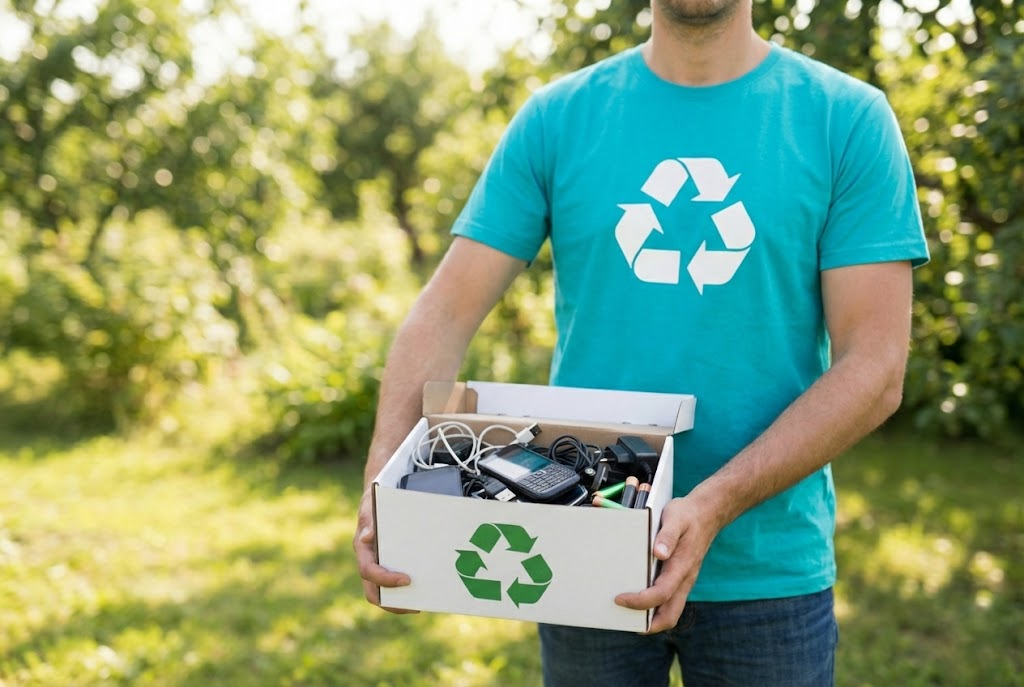
E-waste is piling up faster than almost any other waste category on the planet. Most people picture the copper, gold, and other metals inside old electronics when they think about recycling value but plastic makes up a surprising chunk of what's in there too. It's in the casing of your old laptop, the frame of a dead TV, the cables tangled in a drawer, practically everywhere. Recycling that plastic properly means less of it ends up buried in the ground and more of it gets a second life.
Earthify handles e-waste recycling for both households and businesses, and a lot of what comes through the door is exactly this kind of plastic.
Here's a rundown of where it shows up and what happens to it.
1. Laptop and Desktop Casings
Computer towers and laptop shells are usually built from tough plastics like ABS or polycarbonate, sometimes blended together for extra durability. Once a machine reaches end of life, that casing can be pulled apart from the electronics inside, sorted by material type, cleaned up, and turned into raw plastic again cutting down on how much new plastic needs to be manufactured in the first place.
2. TV and Monitor Frames
The bezels, stands, and outer shells of old televisions and monitors hold a fair amount of plastic, though exactly how much depends on the model and manufacturer. Recyclers separate this plastic from the glass, wiring, and circuit boards before sending each material down the right processing path.
3. Keyboards and Mice
Individually, a keyboard or mouse doesn't seem like much. Multiply that by an office full of them getting swapped out every few years, and it adds up fast. Rather than tossing these in with regular trash, businesses can send them through an e-waste recycler and recover the plastic along with whatever metal is buried inside.
4. Cable Insulation
The rubbery or plastic coating wrapped around electrical and data cables often PVC protects the copper wiring underneath. Recycling a cable means stripping that insulation away from the metal core. The copper gets reused, and depending on the type of plastic, the insulation can often be processed too.
5. Printer and Scanner Parts
Printers and scanners are mostly plastic on the outside covers, paper trays, buttons, internal gears with metal and circuitry hidden inside. A proper recycling facility will take these apart piece by piece, separating plastic from the rest so nothing recoverable goes to waste.
6. Phone and Tablet Casings
Even as phones lean more toward glass and metal these days, plastic is still doing a lot of work in the frame, buttons, and internal structure. Sending old devices to an authorized recycler ensures all those different materials actually get separated instead of dumped together.
7. Everyday Household Electronics
Routers, streaming boxes, game consoles, DVD players the small stuff around the house is often mostly plastic on the outside. It's easy to forget these devices exist once they stop working, but tossing them in with regular garbage means losing plastic that could easily be recovered.
8. Switches, Connectors, and Small Plastic Parts
Sockets, clips, connectors, and switches are scattered throughout most electronics. On their own, they're too small and mixed-up to recycle easily, but a proper dismantling and sorting process at a specialized facility can pull them out and keep material quality high.
9. Networking Equipment
Routers, modems, servers, and switches all come wrapped in plastic panels, cases, and brackets. Businesses tend to cycle through this kind of equipment often as technology moves on, which makes it a genuinely large source of recoverable plastic if it's handled by a proper recycler instead of sitting in a storage closet indefinitely.
10. Office Equipment
Phones, fax machines, copiers, shredders the electronics that fill up an office all carry their own share of recyclable plastic. When a business replaces a batch of equipment at once, organizing a proper e-waste pickup makes it far easier to recover what's usable instead of throwing it all out together.
Why Bother Recycling the Plastic in Electronics?
Plastic doesn't break down on its own for a very long time, and electronics generally aren't something you want mixed in with regular trash anyway they're built from a combination of materials that need to be separated out properly. Doing that recycling right means:
• Less waste ending up in landfills
• Materials getting reused instead of thrown away
• Less demand for brand-new plastic production
• A step toward a more circular approach to manufacturing
• More responsible handling of electronic waste overall
• Better sustainability numbers for businesses tracking that kind of thing
That said, not all plastic is equal here. Electronics often mix different plastic types together with coatings and additives that make sorting more complicated than it looks. That's really why this work is best left to people who do it professionally.
Recycling Plastic E-Waste with Earthify
Getting rid of old electronics responsibly isn't just about clearing space it's about making sure whatever can be recovered actually gets recovered, and that it's done safely. Earthify works with businesses and organizations to handle exactly that, whether it's a pile of old computers, a stack of dead printers, tangled cables, or networking gear that's been sitting in storage too long.
If your business has electronics gathering dust, skip the general waste bin. A proper e-waste recycling solution keeps usable plastic and everything else inside those devices out of the landfill and back into use.
The Bottom Line
Plastic tends to get overlooked in conversations about e-waste, but it's everywhere casings, cables, keyboards, printers, phones, networking gear, office equipment. All of it can potentially be recovered with the right recycling process.
Separating and recycling these materials properly cuts down on waste, saves resources, and keeps the loop closed a little tighter. With a partner like Earthify handling the process, that kind of responsible e-waste management stops being a hassle and just becomes part of how a business operates.