
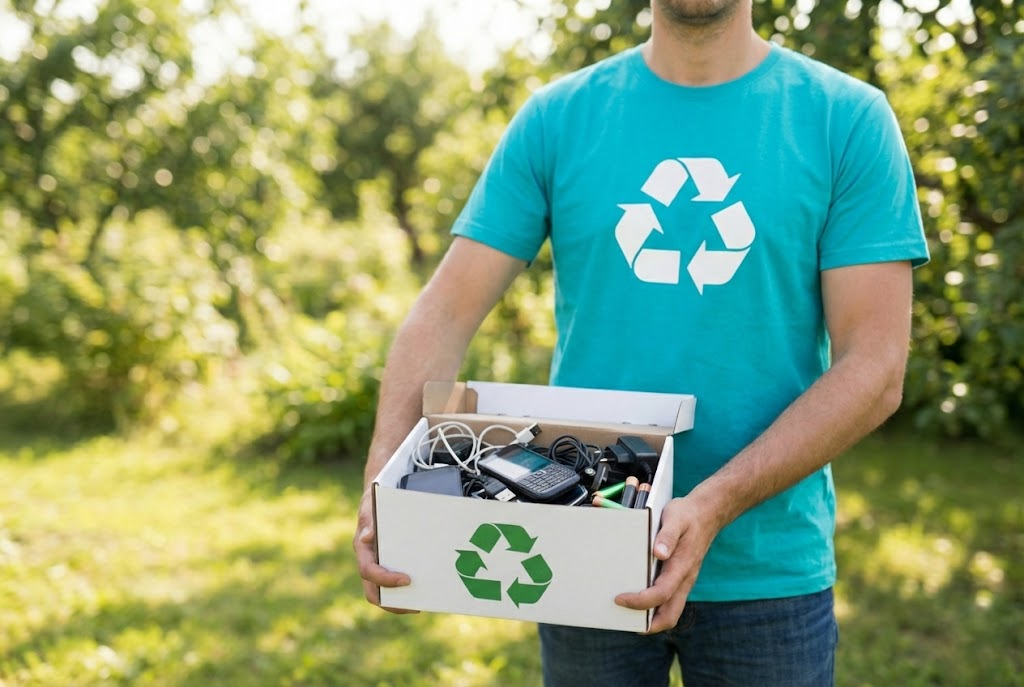
Walk through any Dubai office, warehouse, or retail store and you'll find it: a storage room stacked with old keyboards, printers, routers, monitors, and tangled cables. Most of these items are wrapped in plastic casings, and most businesses aren't sure what to do with them.
Plastic e-waste is one of the trickiest waste streams a company deals with. It can't go in the regular bin, it can contain additives that harm the environment, and it often holds sensitive company data. Handling it well protects your brand, keeps you compliant, and supports Dubai's broader sustainability goals.
What Is Plastic E-Waste?
Plastic e-waste is the plastic part of discarded electronics: casings on laptops and desktops, printer housings, phone covers, cable insulation, server racks, and device panels. These plastics are often blended with flame retardants and other chemical additives, which makes them harder to recycle than a simple water bottle.
When they end up in landfill or get burned, those additives can leach into soil and water or release harmful fumes. Recovered properly, the same plastics can be shredded, sorted, and turned into raw material for new products.
Why It Matters for Dubai Businesses
Dubai has set ambitious targets around waste diversion and the circular economy, and companies are increasingly expected to play their part. There are three practical reasons to take e-waste seriously:
• Compliance. UAE and Dubai authorities regulate how waste is collected, transported, and treated. Using unlicensed collectors can expose your business to penalties and reputational damage.
• Data security. Old devices may still hold client records, financial data, or employee information. Plastic casings come off easily, but the storage inside needs proper destruction.
• Brand and ESG reporting. Clients, investors, and tenders increasingly ask about sustainability practices. Documented recycling gives you real numbers to report.
A Practical Guide to Responsible E-Waste Management
- Audit what you have
Start with a simple inventory. Note what devices you hold, how many, their condition, and where they sit across offices or branches. You can't manage what you haven't counted, and an audit often reveals equipment that could be reused or donated before it ever becomes waste. - Reuse and refurbish first
Recycling is good, but extending a device's life is better. Laptops and monitors that still work can be refurbished, redeployed internally, or donated. Whatever is truly at end of life moves on to recycling. - Separate and store safely
Keep e-waste away from general rubbish. Use a dedicated, dry, secure area, and avoid stacking heavy items in ways that crack casings or damage batteries. Damaged lithium batteries are a fire risk, so store them separately. - Protect your data
Before devices leave your premises, make sure data is wiped or storage drives are physically destroyed. Ask any recycler how they handle this and whether they provide a certificate afterward. - Choose a licensed recycling partner
This is the most important step. A responsible recycler should be properly licensed, transparent about their process, and able to provide documentation. Look for:
• Valid local approvals to collect and process e-waste
• A clear, traceable chain of custody from pickup to processing
• Certificates of recycling or disposal for your records
• Safe handling of hazardous components
• Flexible pickup for both small and bulk volumes - Keep your paperwork
Retain collection receipts, weight records, and recycling certificates. They support audits, ESG reports, and any compliance checks.
How Earthify Recycler Can Help
Working with a dedicated local recycler removes most of the guesswork. Earthify Recycler supports Dubai businesses with e-waste collection and recycling, so your old electronics, including their plastic components, are handled responsibly rather than ending up in landfill.
Here's what a good partnership typically looks like for a business:
• Convenient collection from your office, warehouse, or site, whether it's a single printer or a full IT refresh
• Responsible processing that separates plastics, metals, and other materials for recovery
• Documentation you can use for compliance and sustainability reporting
• A simple process so your facilities or IT team isn't burdened with logistics
For the latest on services, accepted materials, and pickup options, it's worth contacting Earthify Recycler directly and asking for a quote tailored to your volumes.
Tips to Reduce E-Waste at the Source
The garbage you never produce is the best kind. A few routines have a significant impact:
• Buy durable, repairable equipment and prioritise suppliers who offer take-back or repair programmes
• Plan IT refresh cycles instead of replacing everything at once
• Repair before replacing whenever it's cost-effective
• Train your team so employees know where old devices and accessories should go
• Set a clear internal policy that names who is responsible for e-waste and how often it's collected
The Bottom Line
Plastic e-waste doesn't have to be a headache. With a clear process of auditing, reusing, securing your data, and partnering with a licensed recycler, Dubai businesses can stay compliant, protect sensitive information, and show genuine commitment to sustainability.
Ready to clear out that storage room? Reach out to Earthify Recycler to arrange a responsible e-waste pickup for your business, and turn yesterday's electronics into tomorrow's resources.